Photographs
01
Family & Portraits
Images from Havana, family life, travel, celebrations, and later years.
Havana · Tennessee · Across the Americas
Recovering the story of Dr. María Josefa Marón Wallace—a Cuban educator, author, dietitian, traveler, and lifelong student—through the documents and memories she left behind.
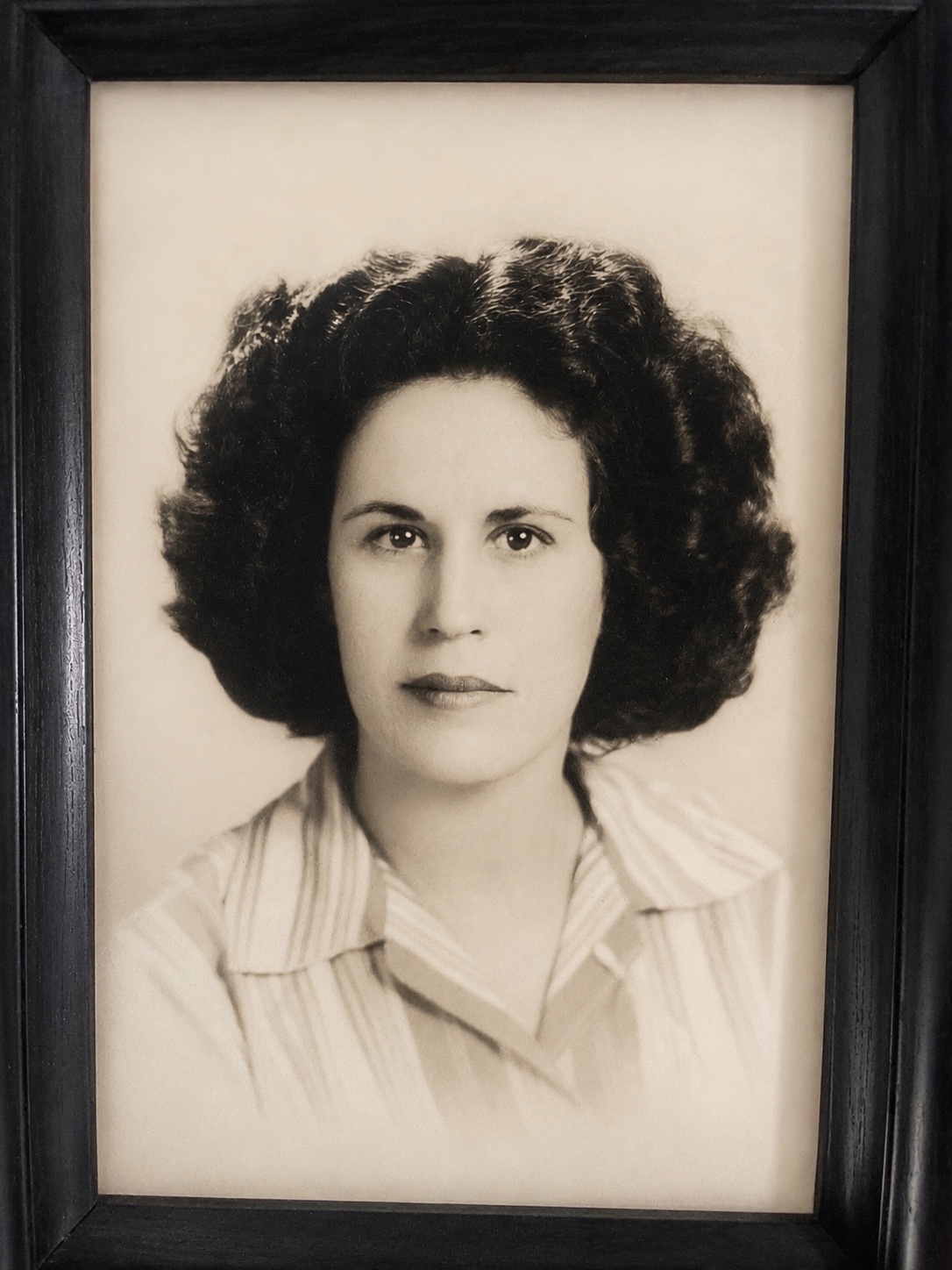
María Josefa Marón Wallace as a young woman. Family collection.
“I am writing her story because I was one of those gifts—and because so much of what she gave us is still here, woven into the color and fabric of our lives.”
— Amanda Browder Gordon, granddaughter and biographer
Her Story
Long before newspaper articles carried her name, before passports and international travel documents carried her across Latin America, there was a little girl in Havana known at home as Muñeca—“doll”—and sometimes Chichita.
María Josefa grew up in a family where education, faith, printing, food, and practical service were intertwined. She worked, studied, crossed borders, and continued learning throughout her life. Her career moved through agriculture, home economics, nutrition, teaching, public health, hospitals, and international service.
This website is a living archive: part biography, part research journal, and part invitation to remember a woman whose life connected Cuba and the United States, family and public service, scholarship and everyday care.
A Found Piece of History
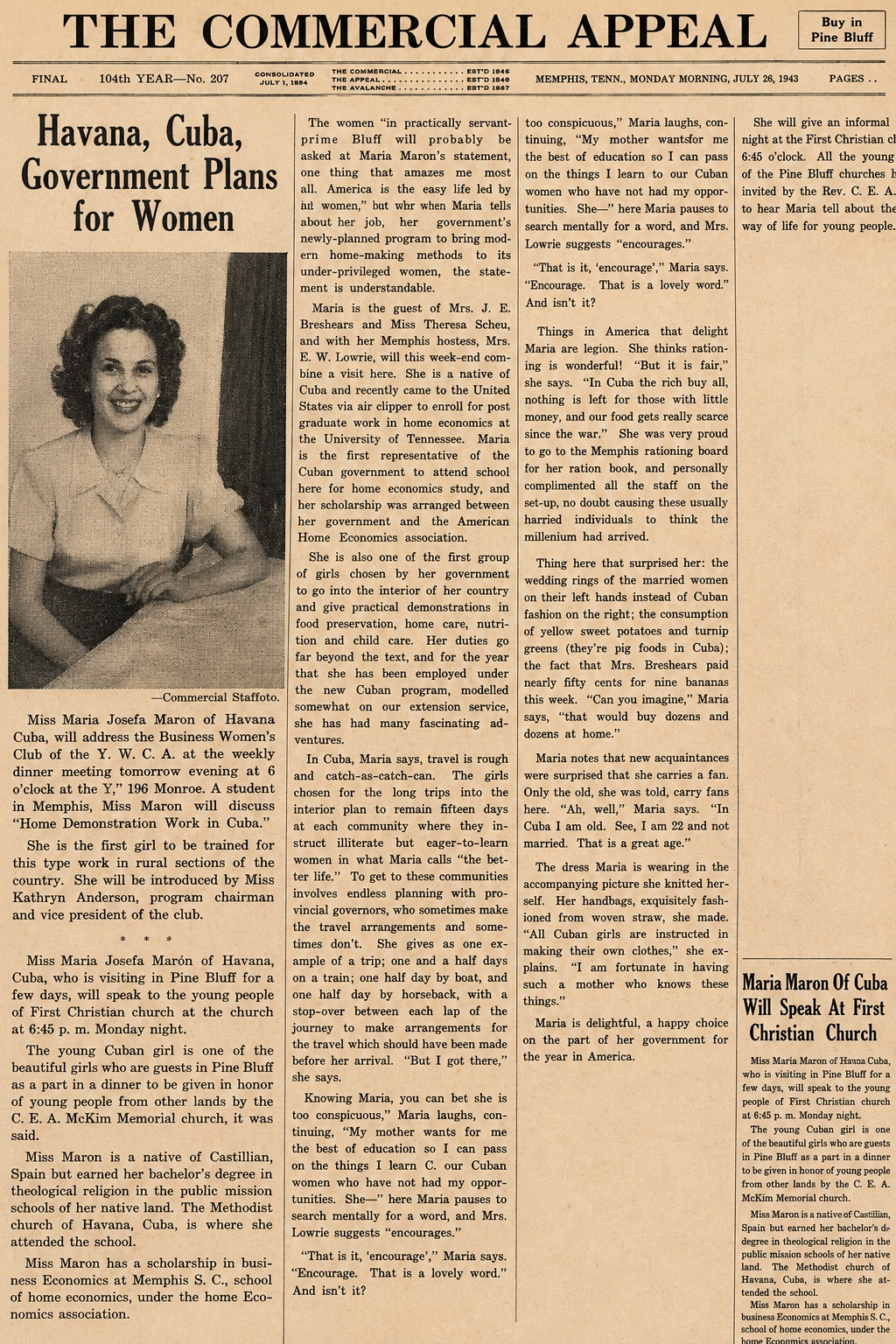
Among the family papers was a newspaper article announcing María Josefa’s selection as a Cuban student sponsored to study home economics at the University of Tennessee.
What began as an effort to organize family papers became a larger historical question: How many women built consequential lives across countries and institutions, yet remain largely absent from public memory?
See how the archive is growingFeatured Exhibit · 1943–1948
María’s surviving papers reveal more than a student trip. In 1943, a young Cuban educator moved through a deliberate chain of preparation, government service, international fellowship, study, and return—carrying knowledge between Cuba and the United States.
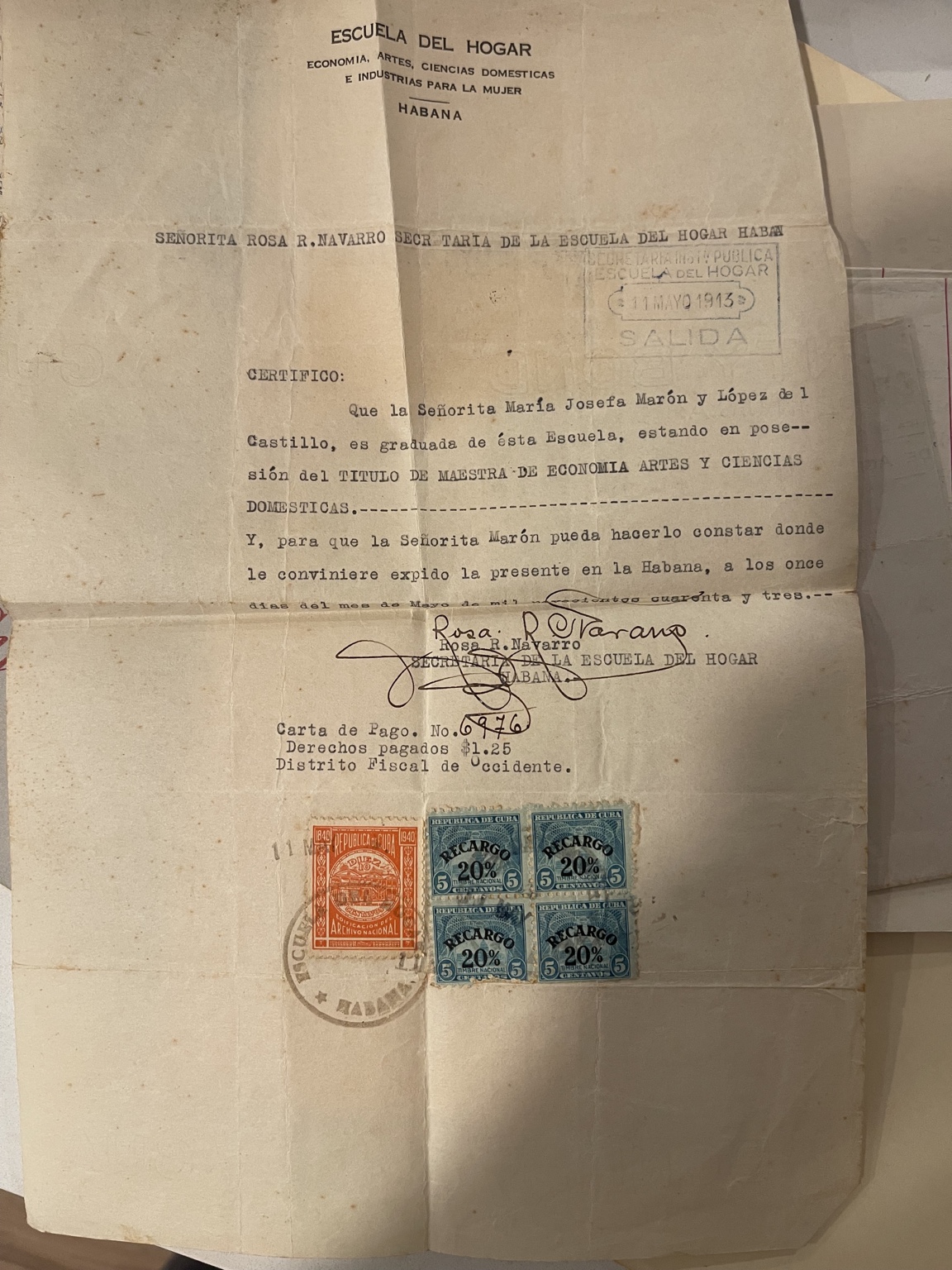
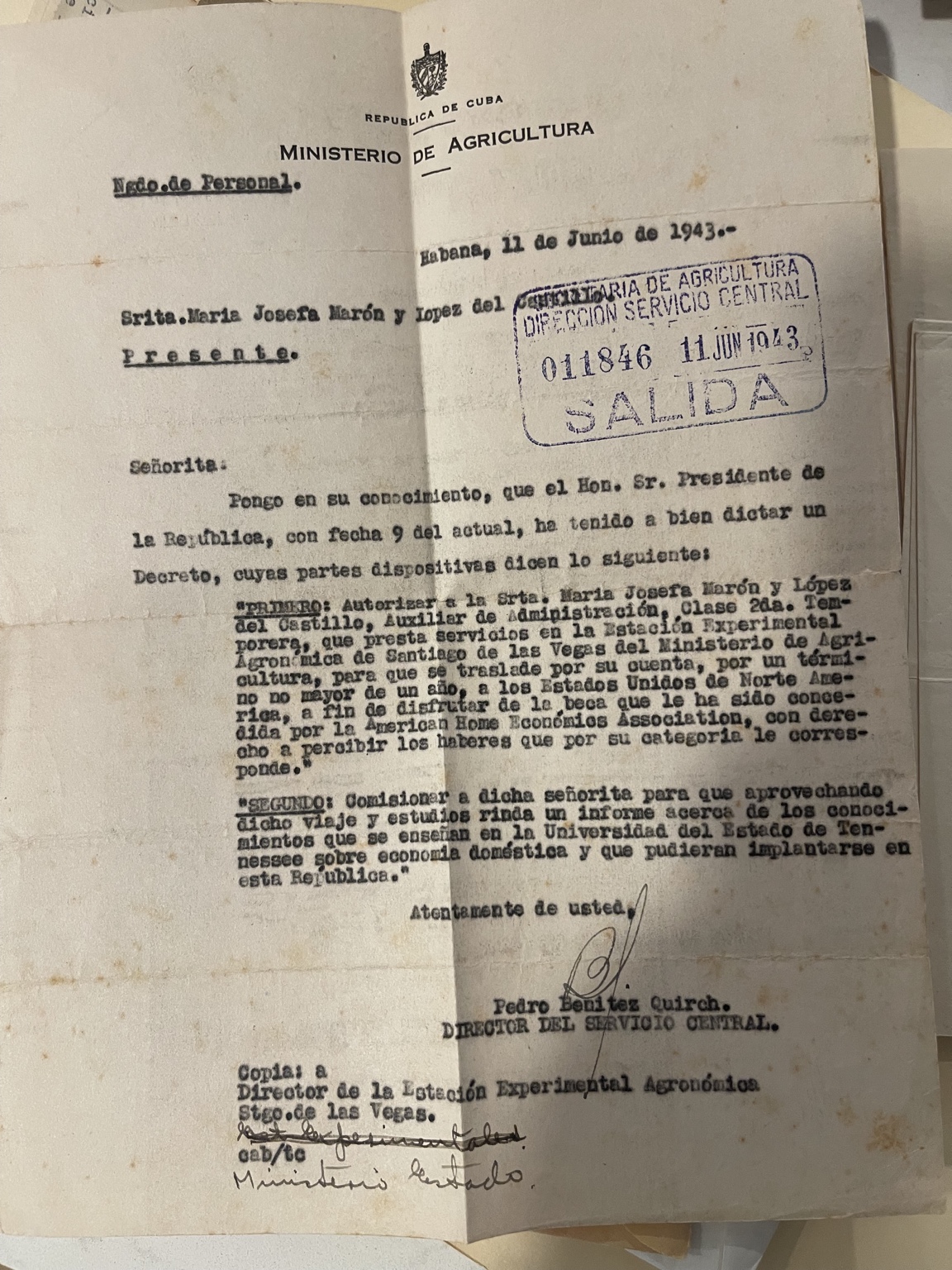
Two Cuban documents establish the foundation. On May 11, the Escuela del Hogar certified María as a graduate and holder of the title Maestra de Economía, Artes y Ciencias Domésticas. One month later, Cuba’s Ministry of Agriculture authorized her travel to the United States under an American Home Economics Association scholarship.
From the Ministry decree
The decree authorized María to travel for up to one year in the United States to make use of the scholarship granted by the American Home Economics Association, while preserving the rights of her government position.
She was also commissioned to report on the home-economics knowledge taught at the University of Tennessee that could be put into practice in Cuba.
English text here is a concise working translation of the surviving Spanish document; a full transcription and translation can be added as the archive develops.
American newspaper coverage identifies María as a University of Tennessee fellowship student and names the American Home Economics Association as sponsor. A longer feature describes her as the first Cuban student to come to UT under the Association’s Foreign Fellowship Plan.
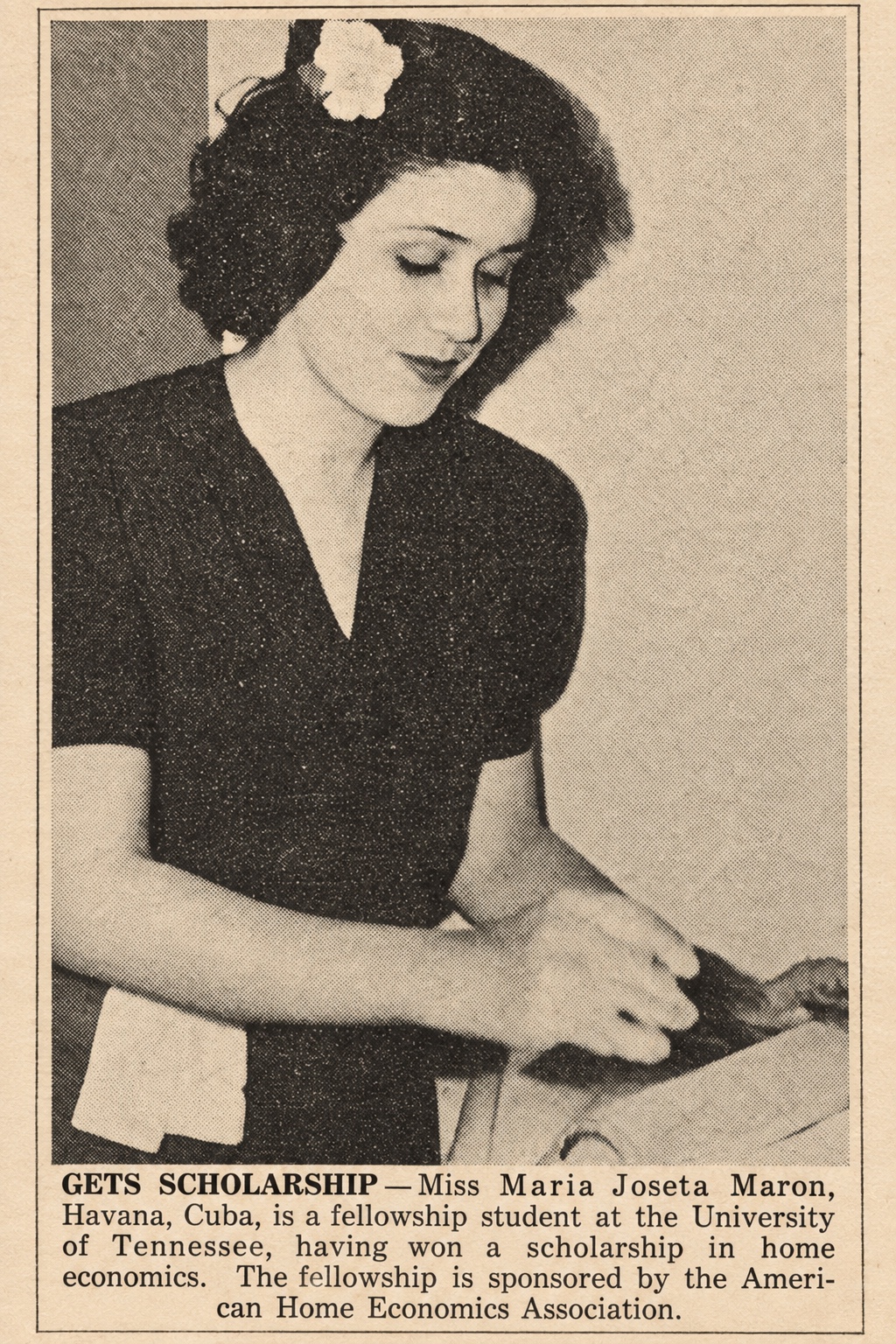
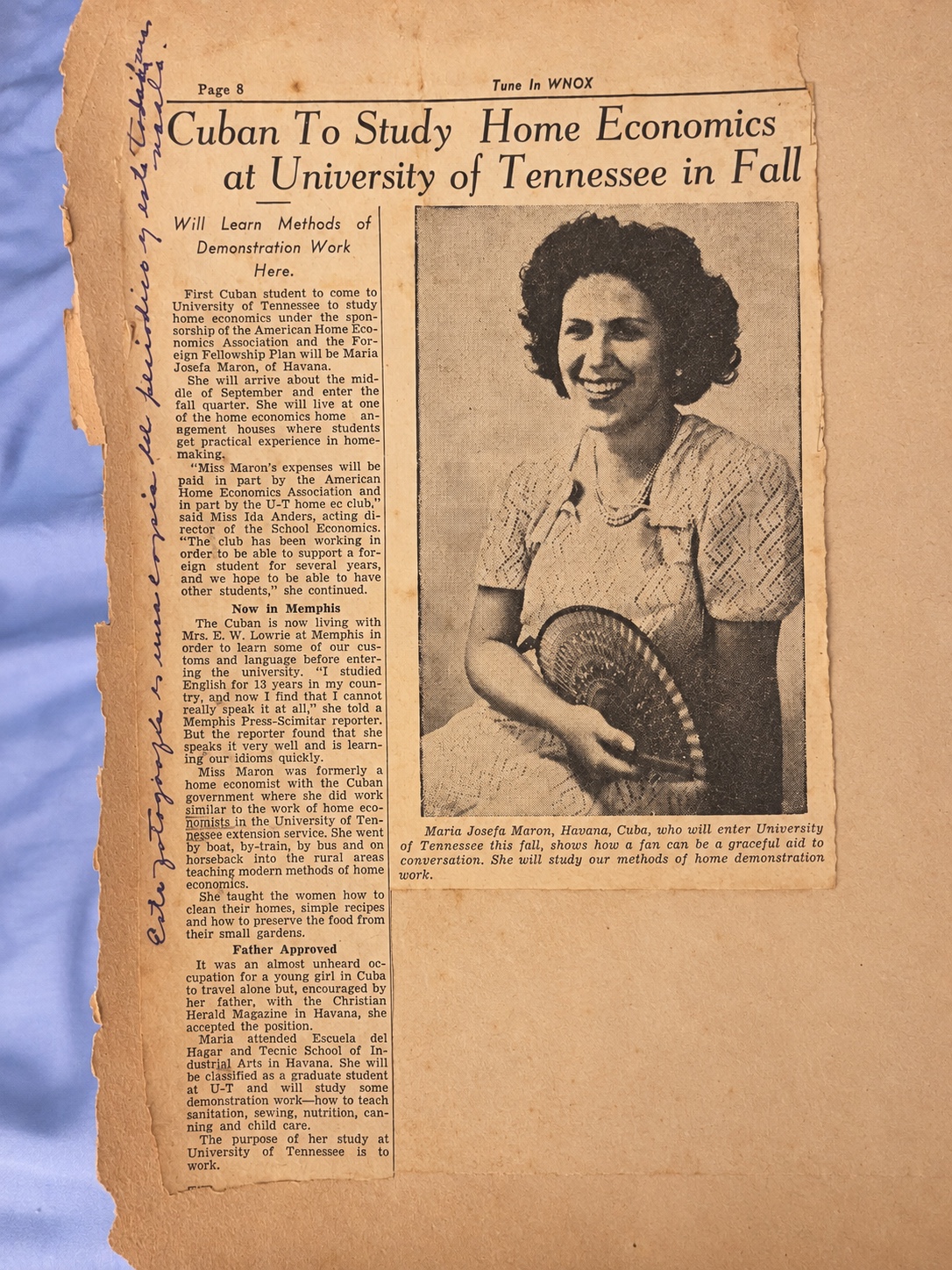
“My mother wants for me the best of education so I can pass on the things I learn to our Cuban women who have not had my opportunities.”
— María Josefa Marón, quoted in American newspaper coverage, 1943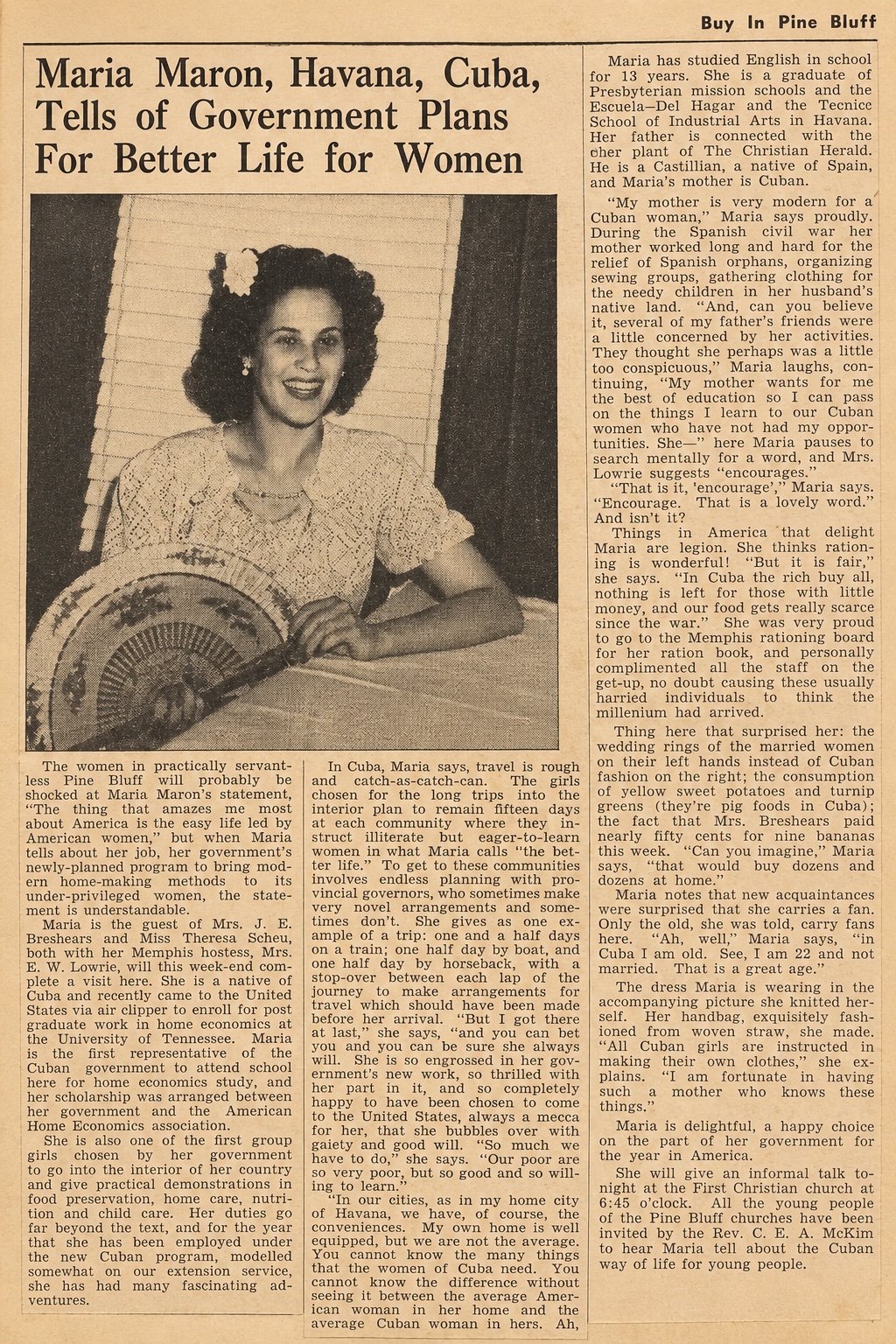
A voice from Cuba
The feature portrays María as both student and practitioner. She describes difficult travel into rural Cuba, practical demonstrations for women, and a government program intended to bring home-making knowledge to women with fewer educational opportunities.
It also preserves small observations that make her feel present: wartime rationing, wedding rings, food prices, the fan she carried, clothing she made herself, and her delight at learning the English word encourage.
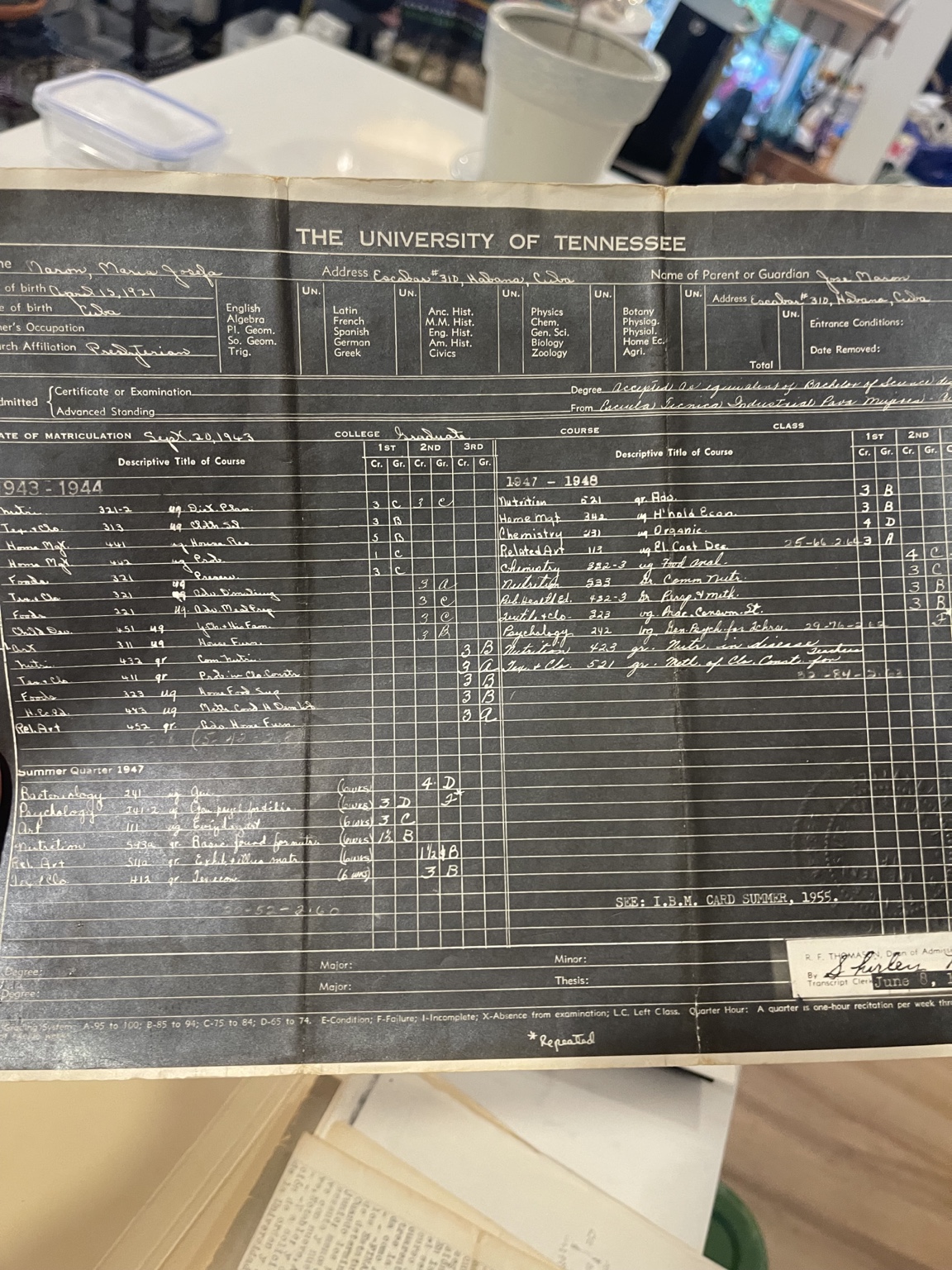
María’s surviving University of Tennessee academic record documents her matriculation and coursework. It also shows that her relationship with Tennessee extended beyond the first fellowship year, with additional study recorded in 1947–48 and the Summer Quarter of 1947.
The return
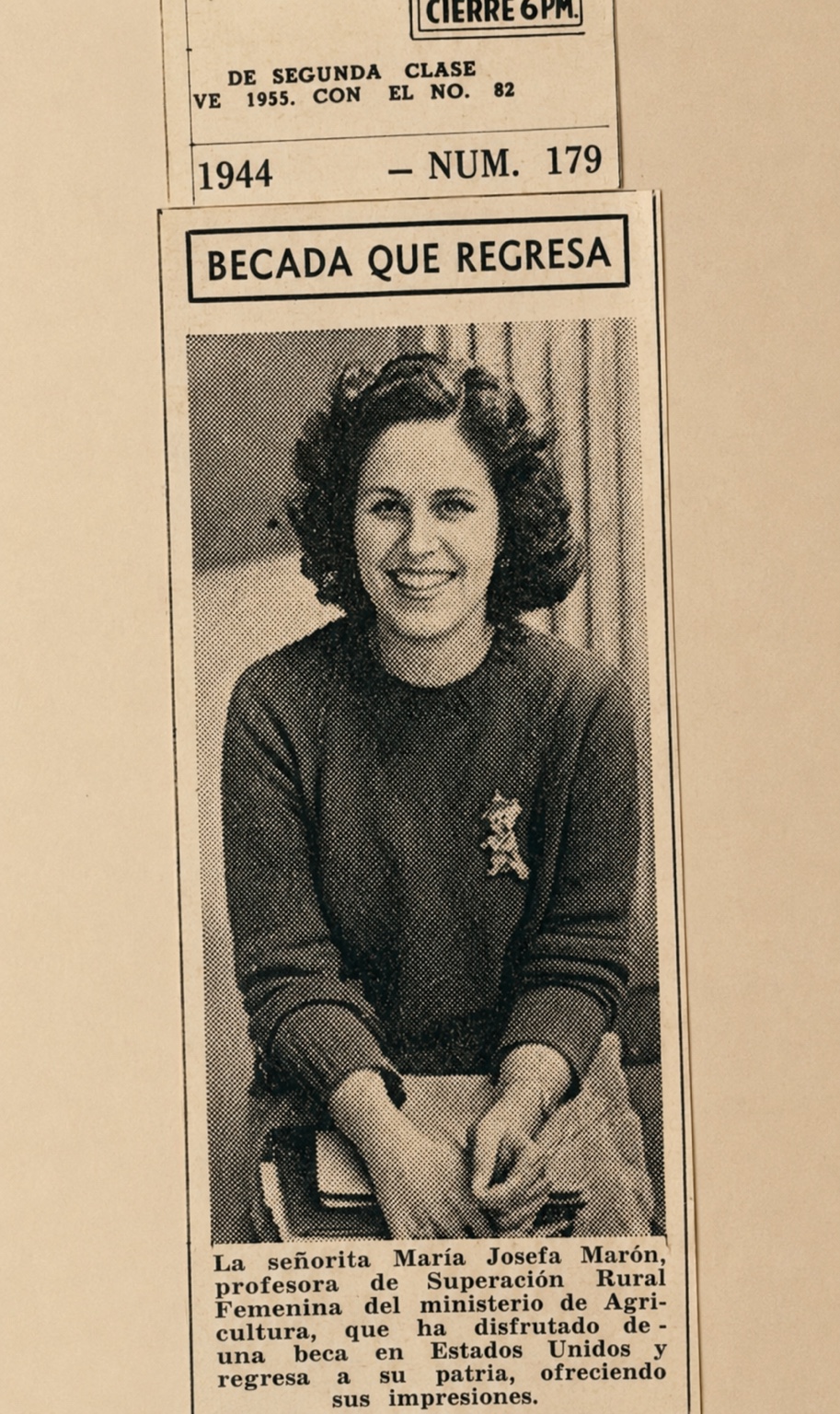
The family archive also preserves a Cuban clipping announcing the return of the scholarship recipient. It identifies María with rural women’s advancement in the Ministry of Agriculture and describes her return to her homeland after study in the United States.
“Miss María Josefa Marón, professor of Rural Women’s Advancement in the Ministry of Agriculture, who has enjoyed a scholarship in the United States and returns to her homeland, offering her impressions.”
Historical context
The American Home Economics Association had an International Fellowship Committee before María’s arrival, and archival collections preserve records of its international work. UT’s history likewise places home economics within wartime education and later international technical-assistance programs. María’s own documents remain the evidence for her individual story.
Working Timeline
Dates and details will continue to be refined as contemporary records are verified.
María Josefa Marón y López del Castillo is born into a family shaped by faith, education, printing, and service.
Her education joins science, food, practical knowledge, and service—threads that continue throughout her career.
She travels from Cuba to the United States for advanced study, supported by an international home economics fellowship.
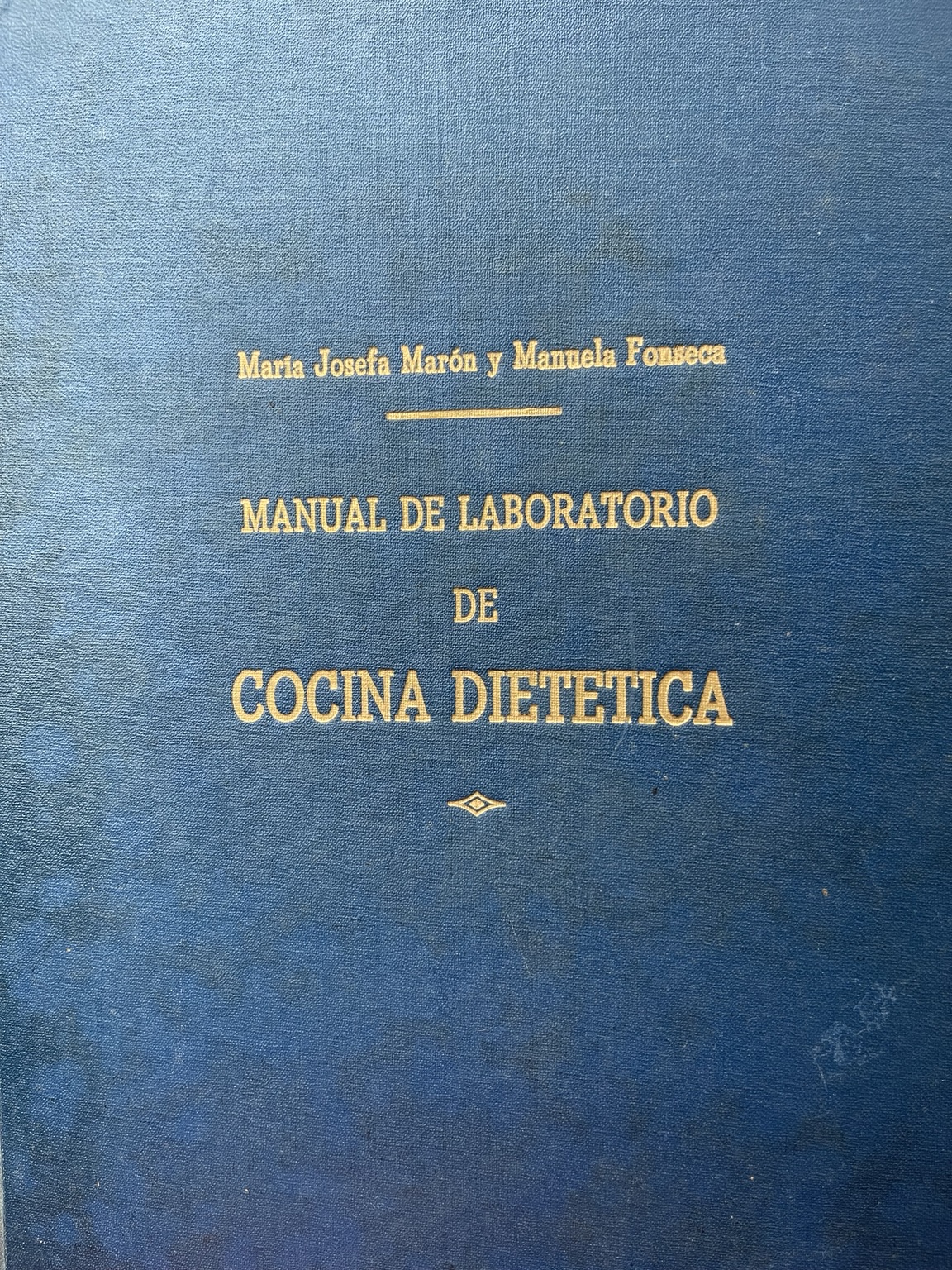
Her name appears on Cocina Dietética: Manual de Laboratorio, evidence of scholarship intended for practical use.
Her professional path extends through hospitals, universities, public health work, and international assignments.
María dies on March 1, leaving papers, objects, memories, family relationships, and an enduring belief in education.
Her granddaughter gathers, translates, verifies, and shares the story one document at a time.
From the Archive
Each object carries a story. These collections will grow as materials are digitized and identified.
01
Images from Havana, family life, travel, celebrations, and later years.
02
Manual de Laboratorio de Cocina Dietética, coauthored by María Josefa Marón and Manuela Fonseca, anchors a growing collection of her published and teaching work.
03
Family letters, blessings, decisions, separations, and connections maintained across borders.
04
A Spanish-language clipping, “Becada que regresa,” marks María’s return after her fellowship in the United States and identifies her work in rural women’s education.
Why “Color and Fabric”?
María sewed matching dresses, kept an eclectic wardrobe, loved jewelry, gardened, studied, taught, and made knowledge practical. In her family, color and fabric came to mean more than style: they represented work, creativity, hospitality, political conscience, and the ways women held families and communities together.
Research Journal
Use these entries for social posts, newsletter updates, and behind-the-scenes research notes.
July 2026
An old article turned a family story into a documented historical journey.
Read the first dispatchResearch in progress
How one generation’s memoir became the evidence map for another generation’s biography.
Research in progress
What affectionate family names can reveal that official records never preserve.
About the Biographer
Amanda is María Josefa Marón Wallace’s granddaughter. What began as an effort to understand her family’s history has grown into a mission to preserve the stories of women whose education, faith, creativity, and service shaped communities.
Drawing on family papers, photographs, memoirs, newspapers, institutional records, and oral history, Amanda is developing a biography and living digital archive that carries María’s story forward in English.